
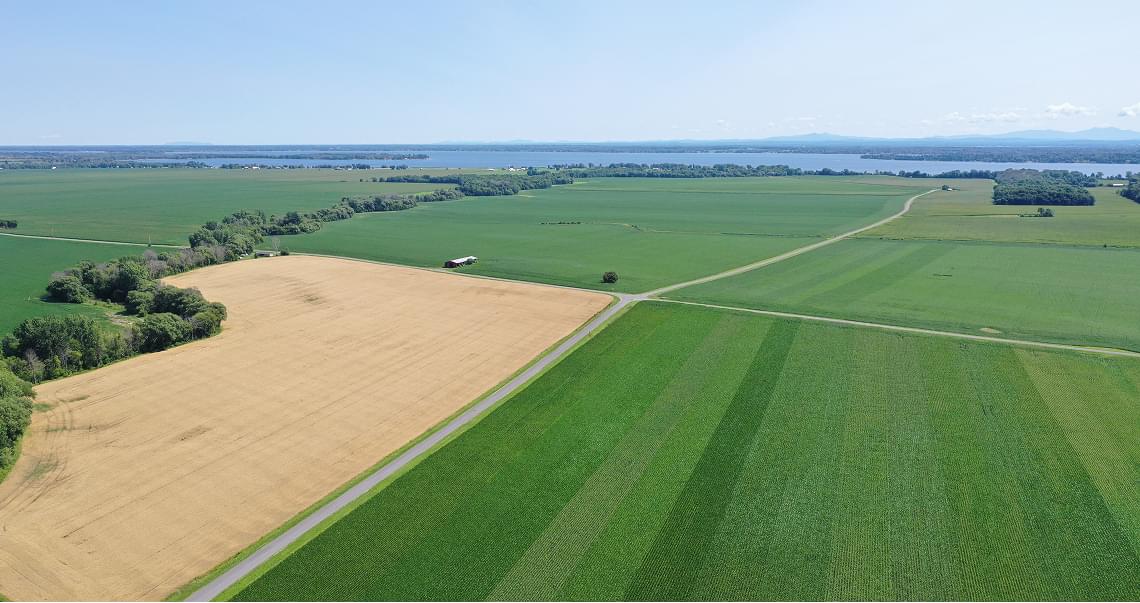
The top 3 agricultural issues in the NY side of the Lake Champlain Basin are phosphorus-laden nutrient runoff, soil erosion from increased storm intensity, and economic pressures on farms to implement costly conservation practices. These issues, compounded by climate change, threaten water quality.
It is estimated that 38% of Lake Champlain’s total phosphorus load is being contributed by agricultural land use practices. At the same time, farmers face challenges in balancing necessary, expensive environmental improvements with low milk prices and the high cost of farming. With the help of State and Federal programs, farm operators in the Lake Champlain Basin are working to reduce their potential for contributing to the Lake Champlain Phosphorus restricted diet.
One of these programs is the NYS Agricultural Environmental Management (AEM) program, which provides technical assistance and financial incentives to farmers to help them implement best management practices on their farms. These practices can include things like covering manure storage facilities, planting buffer strips along streams, and using precision agriculture techniques to minimize the use of fertilizers and pesticides.
-

Featured Project
Lake Champlain Nonpoint Source Pollution Project
Read Full Story: Lake Champlain Nonpoint Source Pollution Project