
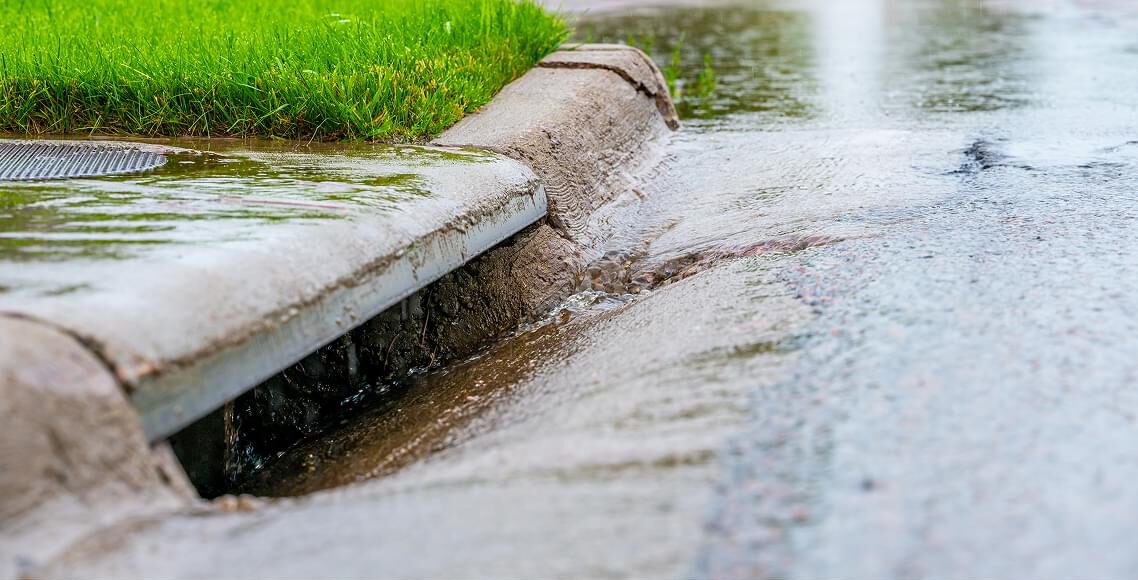
Stormwater runoff plays a major role in the health of the Lake Champlain Watershed. As land becomes more developed, natural water infiltration decreases — increasing runoff volume, erosion, and the transport of pollutants into nearby streams, rivers, and lakes.
Stormwater runoff is a natural environmental process, referring to water that does not soak into the ground. In undeveloped areas such as forests or open fields, much of the rainfall is absorbed naturally into the soil. But when impervious surfaces like roads, rooftops, and parking lots are introduced, water can no longer infiltrate effectively. Instead, runoff moves across the surface at higher volumes and speeds, carrying pollutants into local waterways.
Common Impacts of Stormwater Runoff
- Increased erosion and sediment transport
- Higher runoff volume and flow velocity
- Reduced groundwater infiltration
- Phosphorus pollution contributing to harmful algal blooms
- Nitrogen, heavy metals, and bacteria entering waterways in developed areas
Nonpoint source pollution (NPS) remains one of the leading causes of water quality degradation in the Champlain Watershed. Phosphorus and sediment are among the most significant pollutants affecting the region, impacting water clarity, aquatic habitat, and overall ecosystem health.
Stormwater infrastructure — whether part of a historic drainage system, a newer development, or a regulated Municipal Separate Storm Sewer System community — can significantly influence downstream water quality. With thoughtful planning and implementation, many of these impacts can be reduced through effective Best Management Practices.
Examples of Stormwater Best Management Practices
- Porous concrete sidewalks and permeable pavement
- Rain gardens and vegetated swales
- Biofiltration and infiltration systems
- Reduced land disturbance during construction
- Improved site planning and stormwater controls
These strategies help slow runoff, improve infiltration, reduce pollution, and support more resilient communities throughout the watershed.
-
Featured Project
Lake Champlain Nonpoint Source Pollution Project
Read Full Story: Lake Champlain Nonpoint Source Pollution Project