
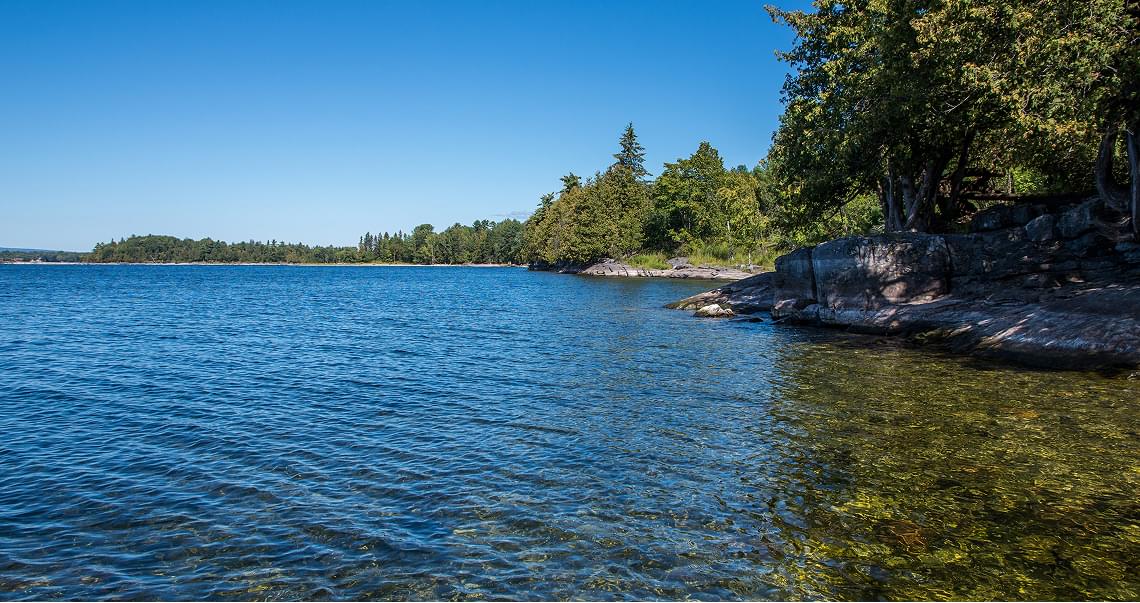
Protecting water quality is at the core of CWICNY’s mission. Across the New York side of the Lake Champlain Basin, rivers, streams, wetlands, and lakes support local communities, recreation, agriculture, wildlife habitat, and drinking water supplies. Maintaining the health of these waters requires coordinated watershed planning, ongoing monitoring, and practical solutions that reduce pollution at its source.
Reducing Nonpoint Source Pollution
Nonpoint source pollution remains one of the largest water quality challenges facing Lake Champlain. Unlike pollution from a single discharge pipe, nonpoint source pollution is carried across the landscape through rainfall and snowmelt runoff. As runoff travels over roads, parking lots, agricultural fields, and developed land, it collects pollutants that eventually enter nearby waterways.
Phosphorus is one of the most significant pollutants impacting the Basin. Excess phosphorus contributes to harmful algal blooms, poor water clarity, and degraded aquatic habitat. Sediment erosion, stormwater runoff, streambank instability, and nutrient runoff from developed and agricultural lands all play a role in water quality degradation throughout the watershed.
Watershed-Based Solutions
CWICNY supports watershed-wide strategies that address water quality through both planning and implementation. Projects are designed to reduce runoff, stabilize vulnerable landscapes, and improve natural filtration throughout the Basin.
These efforts may include:
- Stormwater management improvements
- Streambank stabilization and roadside erosion control
- Green infrastructure and infiltration practices
- Agricultural conservation planning and BMP implementation
- Wetland and riparian buffer restoration
- Infrastructure improvements that increase resilience to flooding and erosion
By addressing pollution at its source, these practices help reduce phosphorus loading while improving ecosystem health and protecting local infrastructure.
-
Featured Project
Lake Champlain Nonpoint Source Pollution Project
Read Full Story: Lake Champlain Nonpoint Source Pollution Project