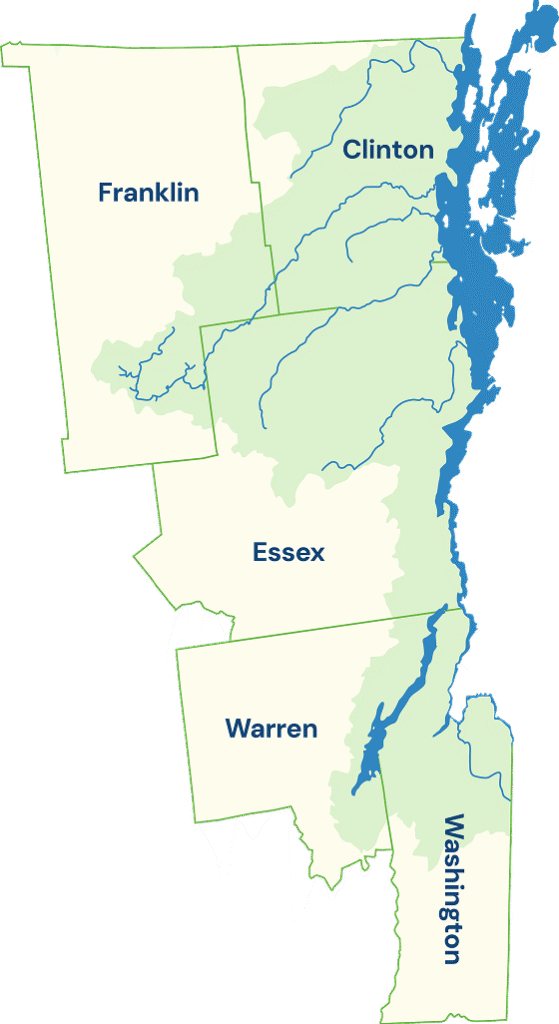
The Lake Champlain Nonpoint Source Pollution Subwatershed Assessment and Management Plan Update focused on reducing nonpoint source pollution across the Lake Champlain Basin through updated data, regional collaboration, and targeted water quality improvement strategies.
Project Snapshot
- Location: Watershed-Wide
- Project Type: Watershed Planning
- Primary Issue Addressed: Sediment runoff, erosion, stormwater, flooding, and general NPS
- Partners: LCLGRPB, CWICNY, County SWCDs
- Funding Source(s): Lake Champlain Basin Program
- Project Timeline: February 2022 – December 2024
The Challenge
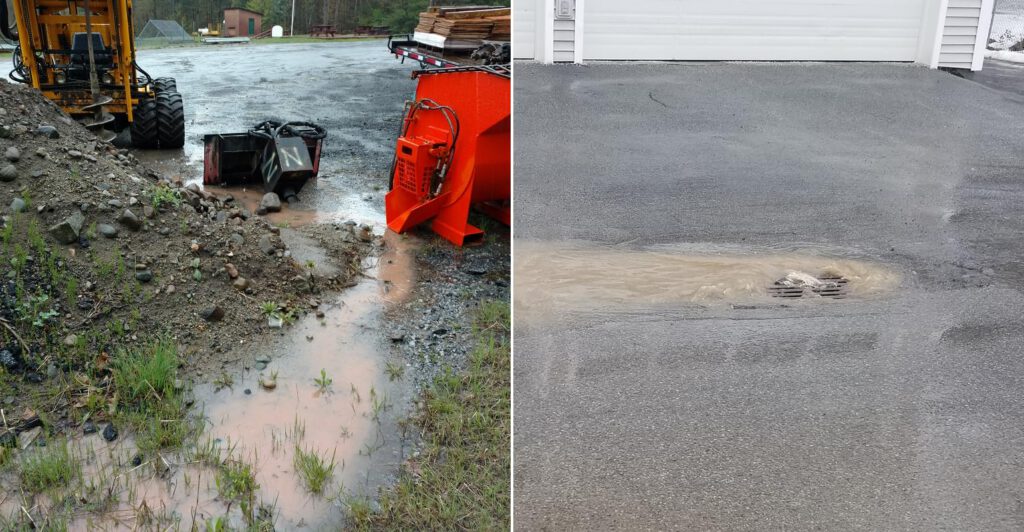
Nonpoint Source (NPS) Pollution remains one of the most significant threats to water quality throughout the Lake Champlain Basin. The 2024 Lake Champlain Nonpoint Source Pollution Plan Update reflects the need to periodically reassess watershed conditions, evaluate progress toward Lake Champlain TMDL phosphorus reduction targets, and ensure that management strategies remain aligned with current land use patterns, monitoring data, and emerging challenges such as more frequent and intense precipitation events.
Periodic updates to long-term watershed planning documents help ensure that technical information, implementation priorities, and supporting data remain relevant and usable for watershed partners, municipalities, and state agencies working to improve water quality. Across the basin, pollution sources such as agricultural runoff, roadside erosion, inadequately managed stormwater, shoreline disturbance, forestry practices, and aging or failing septic systems contribute excess phosphorus and sediment to tributaries and connected waterbodies.
These inputs accelerate eutrophication, increasing the frequency and severity of harmful algal blooms, reducing water clarity, and degrading aquatic habitat. Changes in precipitation patterns and storm intensity associated with climate change further increase the mobilization of nutrients and sediments from the landscape, placing additional stress on surface waters and related infrastructure.
If left unaddressed, continued nonpoint source loading threatens drinking water supplies, recreational uses, and fisheries that rely on high water quality conditions. The 2024 update reinforces the importance of coordinated watershed-scale management strategies that emphasize implementation of best management practices (BMPs), improved land use planning approaches, targeted investment in priority subwatersheds, and strengthened collaboration among municipalities, watershed organizations, and state partners to reduce pollutant loading at its source.
Project Goals
- Identify new priority projects and issues
- Assess the impacts of past watershed management plans
- Strengthen Watershed Coordination and Planning
The Solution
Watershed-scale planning provides a framework to organize the efforts of multiple agencies, municipalities, and organizations around a shared goal of reducing nonpoint source pollution. Because watershed processes and pollutant pathways extend beyond municipal boundaries, a basin-wide planning approach allows stakeholders to evaluate cumulative impacts, identify priority source areas, and target implementation strategies where they will achieve the greatest water quality benefit. Planning at this scale supports data-driven decision making, aligns local actions with Lake Champlain TMDL phosphorus reduction targets, and helps ensure that limited funding resources are directed toward projects with the highest improvements and impacts.
Implementation
The planning process included coordination among state agencies, regional partners, municipalities, and watershed stakeholders to compile existing data, identify pollutant sources, and prioritize implementation strategies that reduce phosphorus and sediment loading. Work was carried out through a combination of technical analysis, stakeholder engagement, and review of previously completed studies to ensure consistency with the Lake Champlain TMDL and related basin-wide initiatives.
Key implementation steps included:
- Review and synthesis of existing watershed plans, monitoring data, and technical studies
- Identification of priority subwatersheds and critical source areas contributing phosphorus and sediment
- Coordination with municipal officials, agricultural partners, and state agencies to validate local conditions and opportunities
- Evaluation of best management practices (BMPs)
- Development of an implementation framework to support project prioritization, funding alignment, and project advancement
Results & Outcomes
The 2024 Lake Champlain Nonpoint Source Pollution Plan Update reaffirmed many of the watershed priorities identified in previous basin planning efforts while incorporating updated data, implementation progress, and emerging environmental challenges. The update provides watershed partners with a current and actionable framework to guide future water quality improvement efforts throughout the basin.
Key outcomes of the project include:
- Reaffirmation of past watershed priorities and critical source areas throughout the Lake Champlain Basin
- Identification of 99 implementation projects focused on reducing phosphorus and sediment loading
- Comprehensive review of previous implementation efforts, including more than $32 million invested across 62 completed water quality improvement projects
- Updated watershed information and planning tools to support future grant applications, municipal planning, and coordinated implementation efforts
Partnerships & Collaboration
- Lake Champlain Lake George Regional Planning Board
- CWICNY
- Clinton, Essex, Franklin, Warren, Washington SWCDs
- NYSDEC, Lake Champlain Basin Program
Lessons Learned / Best Practices
- Long-term watershed planning is most effective when regularly updated to incorporate new monitoring data, completed implementation projects, changing land use patterns, and emerging issues.
- Strong coordination among municipalities, state agencies, watershed organizations, agricultural stakeholders, and regional partners improves project implementation success.
- Maintaining a comprehensive inventory of completed and proposed projects helps identify funding gaps, track progress toward TMDL targets, and prioritize future investments based on watershed needs and pollutant reduction potential.
Conclusion
The 2024 Lake Champlain Nonpoint Source Pollution Plan Update provides an updated roadmap for reducing phosphorus and sediment loading throughout the basin while reinforcing the importance of coordinated, watershed-scale management. By compiling current data, reviewing implementation progress, and identifying future project opportunities, the update strengthens the ability of municipalities, agencies, and watershed partners to make informed decisions and pursue targeted water quality improvements. Continued collaboration, investment, and implementation of best management practices will remain critical to protecting Lake Champlain’s water quality, ecological health, recreational value, and long-term resilience for future generations.
Learn More / Contact
Lake Champlain – Lake George Regional Planning Board
Sam.blake@lclgrpb.org
https://www.lclgrpb.org/lake-champlain-basin-pollution-reduction