A watershed-wide pilot project helping farms reduce erosion, capture nutrients, and improve long-term resilience through cover crops and soil health practices.
Project Snapshot
- Location: Plattsburgh, NY
- Project Type: Agricultural: Soil Health Practices
- Primary Issue Addressed: Sediment and Nutrients
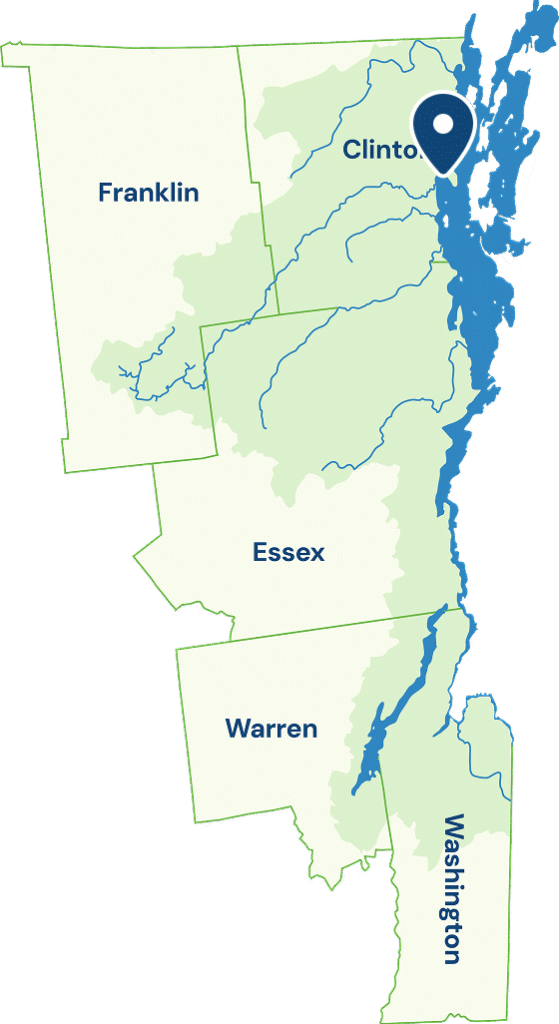
- Partners: 5 Soil and Water Conservation Districts
- Funding Source(s): Lake Champlain Basin Program
- Project Timeline: January 2024 – December 2025
The Challenge
Agriculture provides one of the greatest sources of phosphorus loads in the Lake Champlain Basin. An estimated 8.7% of the New York portion of the Lake Champlain watershed is agriculture. However, agriculture provides the greatest load across all land use sectors at an estimated 38% of the loading.
While many state and federal programs exist to assist agricultural operations, there are gaps in funding opportunities to achieve greater phosphorus load reductions in the agricultural sector.
Project Goals
This project will support the implementation of agricultural best management practices (BMP) projects that will supplement other state and federal funding initiatives.
The model for this project is based off of a successful pilot program implemented in the Finger Lakes region of New York, to implement a comprehensive soil health and erosion control program. Soil health has been identified as a key component to not only improve water quality but to mitigate impacts from climate change.
- Districts assisted farmers by planning soil health practices using the Agricultural Environmental Management (AEM) planning protocol
- Farm specific plans were utilized to identify farms to be enrolled in the program
- District staff assisted farms to complete the implementation of planned soil health practices and provide reimbursement based on the reimbursement rates provided by the NYS Soil and Water Conservation Committee.
The Solution
A watershed-wide approach was used to fairly distribute funding across the NY side of the Lake Champlain watershed.
The Champlain Watershed Improvement Coalition of NY (CWICNY) is an 501c3 organization formed by the 5 Soil & Water Districts in Clinton, Essex, Franklin, Warren and Washington Counties as well as representatives from the 5 County Water Quality Coordinating Committees and the Regional Planning Board.
Our organization has implemented many regional water quality projects for over 20 years.
Implementation
The goal of the project was to plant cover crops and implement other soil health best management practices over the course of the 2-year grant. In general, farmer reimbursement rates were determined by the NYS Soil and Water Conservation Committee’s per unit rates for component practices.
Each County was allocated funding and independently prioritized project locations and practices based on local needs. Farms were reimbursed for following field visits and confirmation of implementation.
Results & Outcomes
- More farms planted cover crops
- Farms increased the acres of cover crops and other soil health practices
Environmental Impact
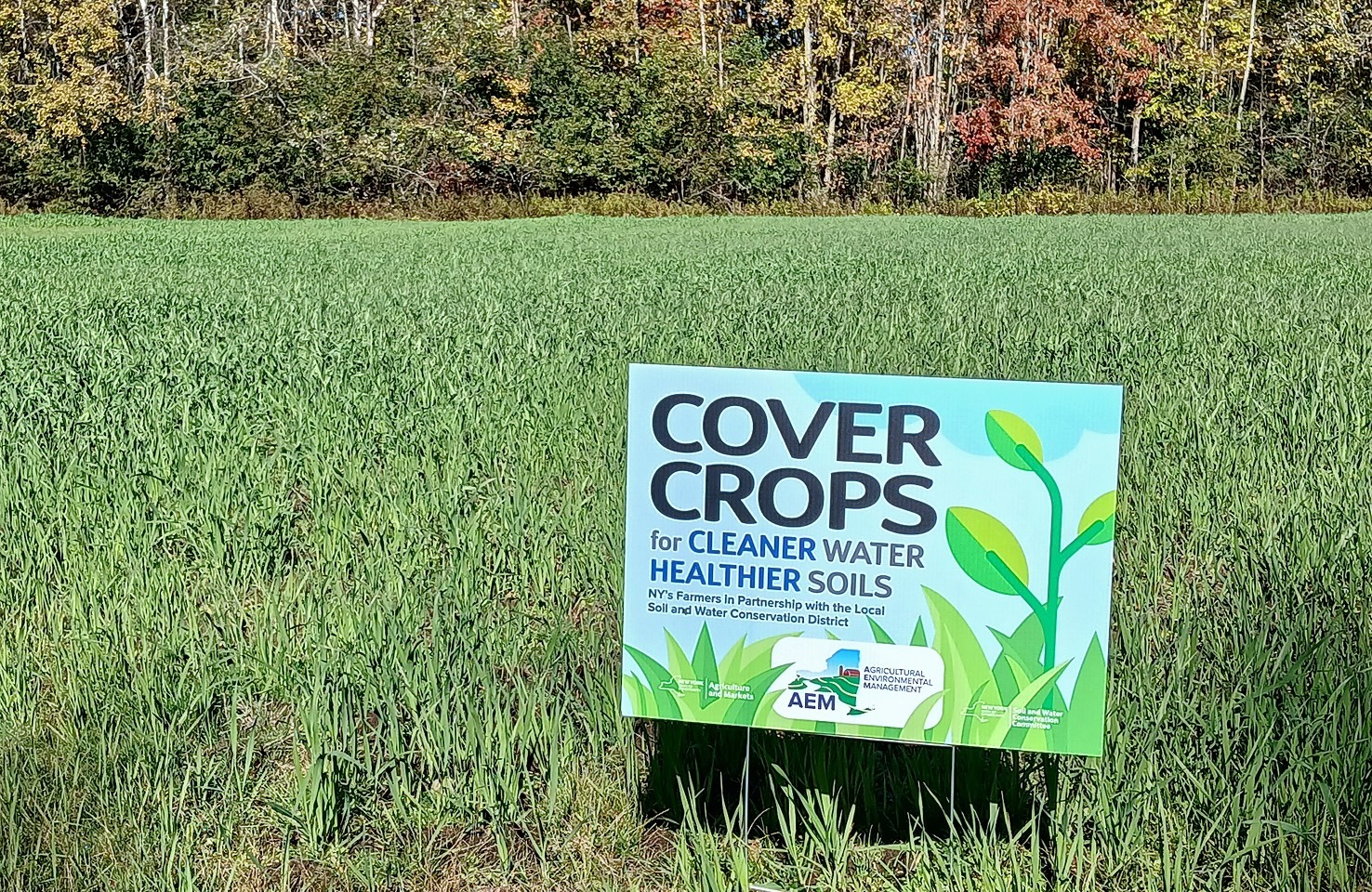
The implementation of cover crops and other soil health practices helped to prevent erosion, capture excess nutrients and increase soil organic matter.
Partnerships & Collaboration
Myra Lawyer, Lake Champlain Basin Program Agronomist
Lessons Learned / Best Practices
- Planning needs to start early in the season
- Earlier planting of cover crops leads to much better success
- Incentivize earlier planting
Conclusion
Over the course of 2 years, 2,835 acres of soil health practices were planted and paid for through the contract; some Districts used the State soil health rates and some used lesser rates to get more acres planted across the farms. 1,222 additional acres were planted by participating farms above and beyond the state funding available. Total reimbursement to local farms added up to $192,000.
Learn More / Contact
For more information, contact Grant Manager Peter Hagar, Clinton County Soil and Water Conservation District Manager
Peter.hagar@ccsoil-water.com or 518-561-4616 ext 3